Learn how to select the right plastic pallet box for beam racking, shuttle systems, and AS/RS. This guide covers racking loads, dimensions, base structures, materials, safety, and ROI.
Overview
A plastic pallet box integrates a heavy-duty pallet base with a large-volume container for stacking, forklift handling, and closed-loop circulation. It is widely used in food and beverage, cold chain, fresh produce, automotive parts, e-commerce, pharmaceutical, and chemical warehouses. Compared with a tote-plus-pallet combination, a one-piece pallet box offers better stability on beams, higher cube utilization, and safer racking.
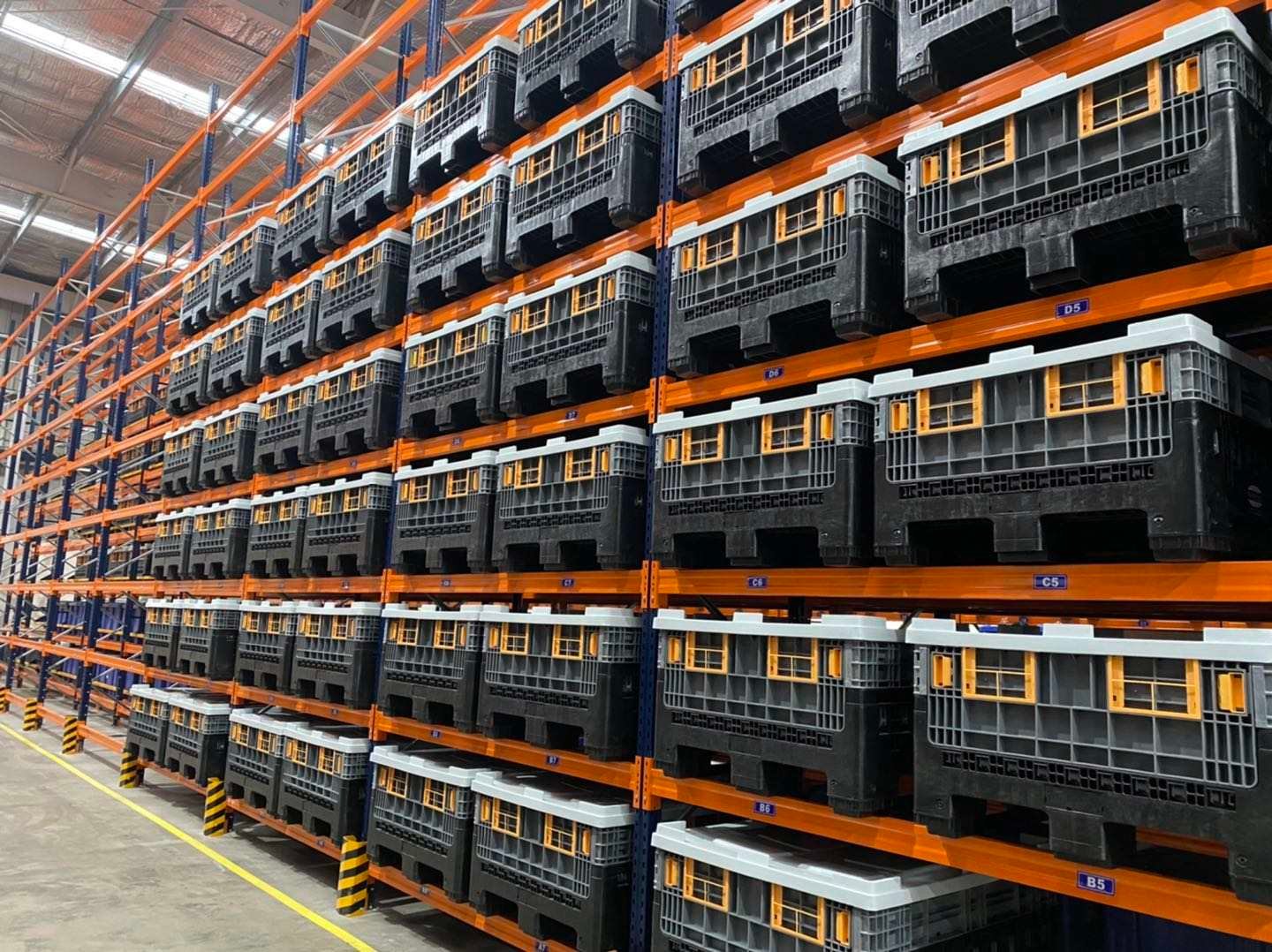
Why use plastic pallet boxes on racking
- Structural strength and stability: One-piece base and walls distribute load evenly and resist deflection on beams.
- Handling efficiency: 4-way entry supports forklifts, reach trucks, and AGV/AMR.
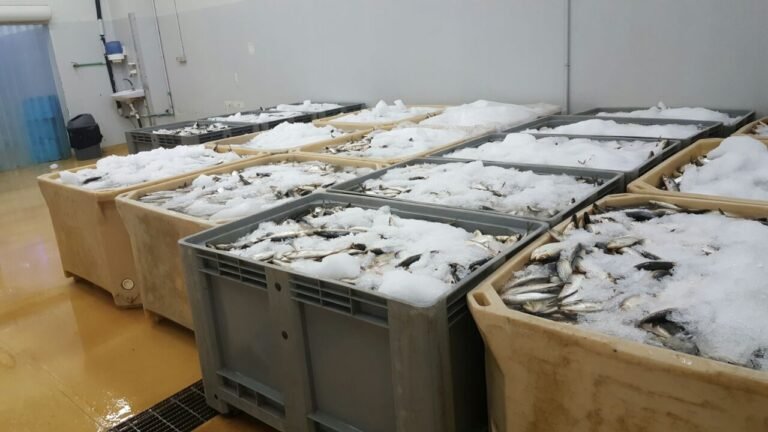
- Hygiene and durability: HDPE/PP resists corrosion, is easy to clean, and works in cold rooms.
- Safety: Optional steel reinforcements, anti-slip pads, and edge guards reduce fall risk.
- Cost efficiency: Collapsible versions cut return freight and support long service life.
- Traceability: Supports RFID, QR plates, and laser codes for WMS/AS/RS integration.
Key racking-fit parameters (what to check)
Size standards
- Euro: 1200 × 800 mm
- International: 1200 × 1000 mm, 1100 × 1100 mm, 1140 × 1140 mm, 48 × 40 in
- Height: typically 760–1000 mm (box + base); verify beam clearances and lift heights
Load ratings (UDL—uniformly distributed load)
- Static (floor stacking): 1000–5000 kg
- Dynamic (handling/conveying): 500–1500 kg
- Racking load: 300–1000 kg depending on steel reinforcement and beam span
Note: Always validate racking load by span and temperature, and ensure deflection within limits—often ≤ L/200. Never substitute static load for racking use.
Materials and manufacturing
- HDPE: superior low-temperature toughness and impact; common for food-grade and cold chain.
- PP: higher stiffness and heat resistance.
- Processes: injection-molded (precision/strength) or blow-molded (lighter, impact-resistant).
- Food contact: FDA/LFGB materials available.
Bottom structure
- 3 runners (3 skids): preferred for racking stability across beams.
- 9-foot/6-foot: floor use; not recommended directly on beams.
- Steel reinforcements: fitted in runners or perimeter to increase racking load and reduce deflection.
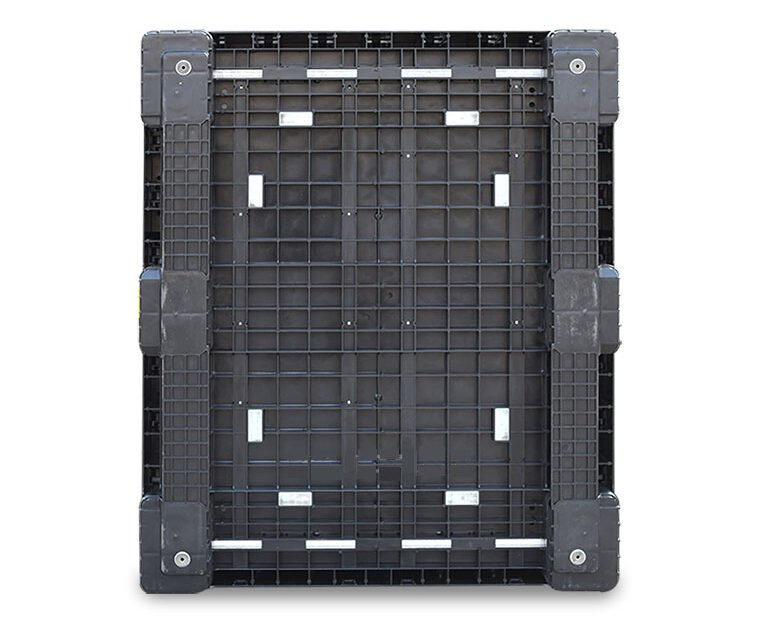
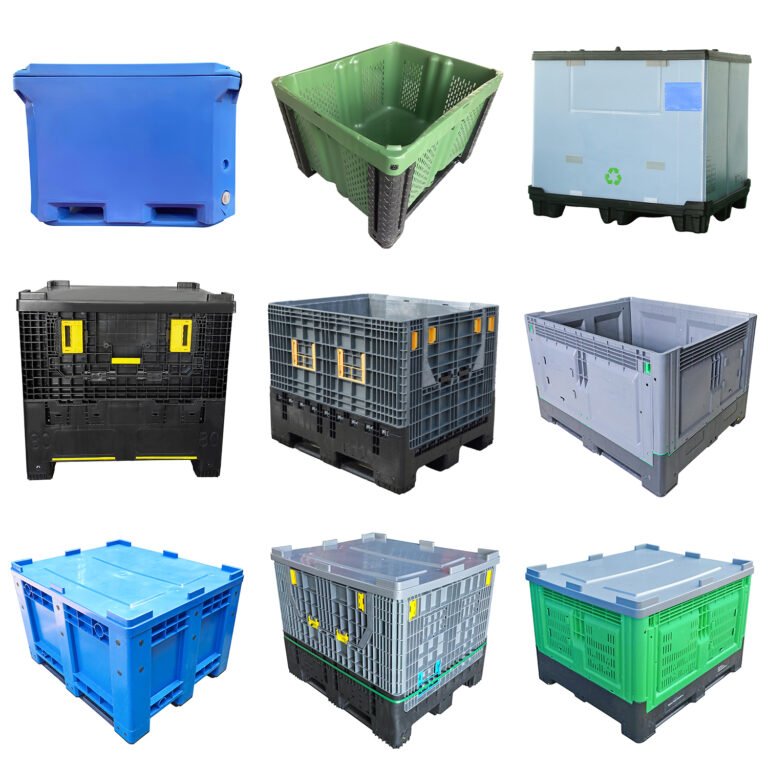
Box types and features
- Solid walls: maximum strength, leak-proof.
- Vented walls: airflow for produce and fast cooling.
- Collapsible: 50–70% return volume reduction.
- Drop door: ergonomic picking on rack.
- Lids: dust protection and safer stacking.
Compatibility and safety
- Racking: Selective, Drive-in, VNA, Shuttle, and AS/RS.
- Beam span: commonly 800–1200 mm; consult vendor racking load curves.
- Temperature: typical -30°C to +60°C; validate for extreme cold storage.
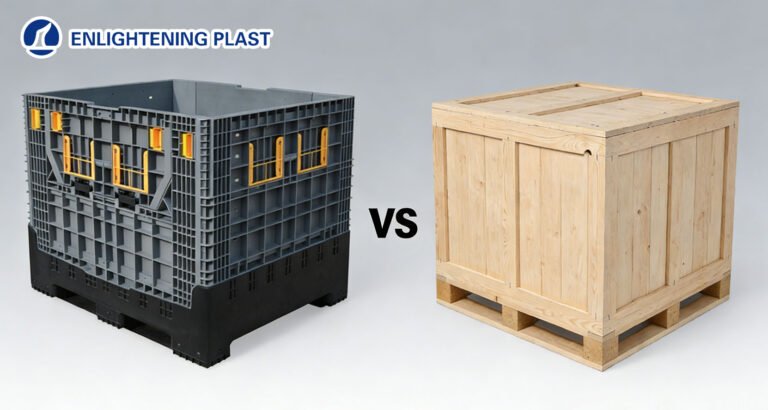
Plastic pallet box vs wood/metal
- Versus wood: hygienic, splinter-free, dimensionally stable, moisture-resistant.
- Versus metal: lighter, less wear on beams, better total cost of ownership; metal excels only in extreme, heavy-duty cases.
Best practices for safe, efficient racking
- Uniform loading; avoid point loads and off-center weight. Keep the center of gravity within ±50 mm of center.
- Use 3-runner bases with steel tubes for racking; verify beam span against manufacturer data.
- Fork handling: 4-way entry at < 5 km/h; fork length and spacing must support runner load zones.
- Deflection control: confirm combined weight and temperature meet deflection limits.
- Stacking: obey static test limits (typically 2–4 layers on floor); do not add loads on racked units.
Typical specification examples
- 1200 × 1000 × 760 mm, 3 runners, HDPE, static 3000 kg, dynamic 1000 kg, racking 600 kg, 3 steel tubes, solid walls with lid.
- 1200 × 1000 × 975 mm, collapsible, PP/HDPE blend, static 2000 kg, dynamic 800 kg, racking 400 kg, front drop door.
- 1200 × 1000 × 1000 mm, HDPE, cold-store grade, usable at -30°C, anti-slip rim and guided fork pockets.
Always confirm final ratings with supplier test data and your racking beam span.
Selection workflow
- Identify rack type and beam span.
- Define max net load per box and temperature range.
- Select a 3-runner base; add steel tubes for racking.
- Choose standard footprint (EU/US/AP) to fit aisles, conveyors, and shuttles.
- Pick box style (solid/vented/collapsible/drop door/lid).
- Validate racking load curve and deflection; run a 24–48 h trial on-site.
- Check compliance needs (food contact, ESD, UN dangerous goods if applicable).
Use cases
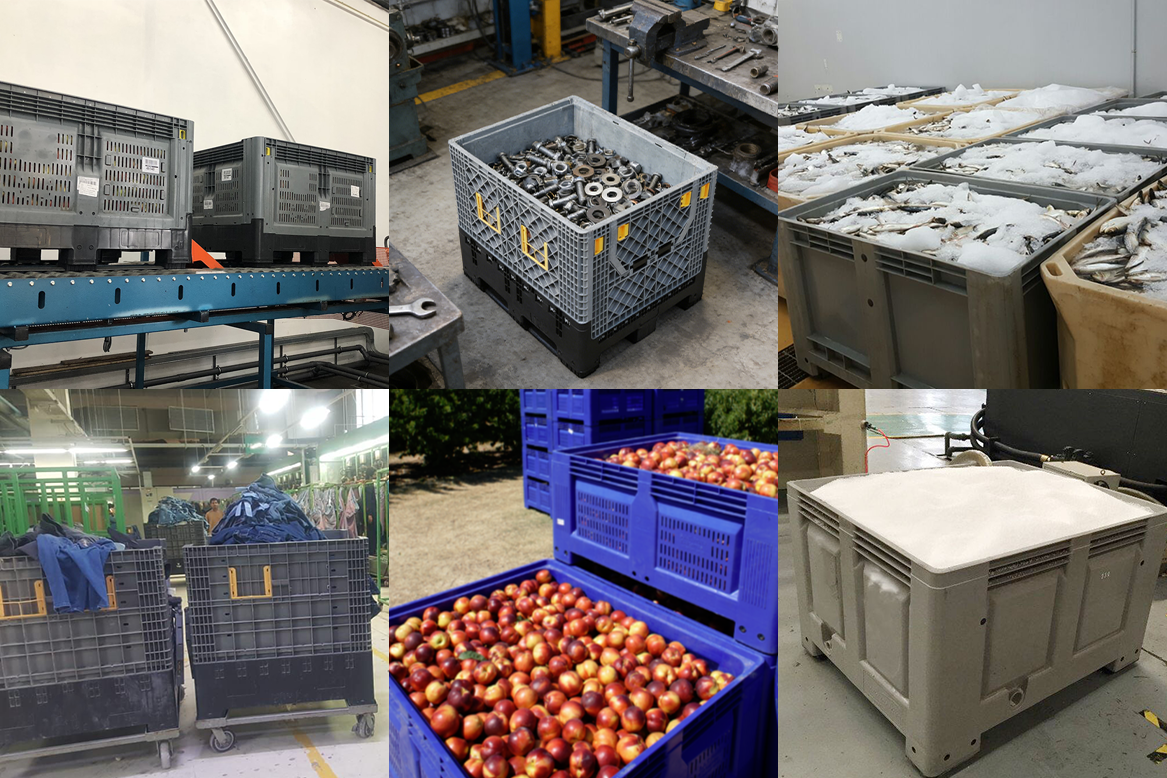
- Food and beverage: raw materials, packaged goods, cold storage, racked picking.
- Fresh produce: vented walls with cold chain; shuttle or AS/RS.
- Automotive parts: collapsible with custom dunnage; VNA high-bay warehouses.
- Pharma and personal care: solid with lids in clean areas.
- E-commerce and 3PL: standardized footprints with RFID for high throughput.
- Chemicals and powders: solid leak-proof walls; consider UN certification.
Costs and ROI
- Upfront cost is higher than wood, but 5–10 years lifespan lowers per-trip cost.
- Collapsible versions reduce backhaul volume by 20–40%.
- Lower damage and rack wear; throughput improvements of 5–15% are common.
FAQ
Can a plastic pallet box sit directly on beams?
Yes—use a 3-runner base and preferably steel reinforcement, and follow the manufacturer’s racking load data. 9-foot bases are not recommended for beams.
What’s the difference between racking, dynamic, and static load?
Racking load is usually the lowest due to span/deflection limits. Do not substitute static load for racking applications.
Is it suitable for cold rooms?
Yes—use low-temperature grade HDPE with anti-slip features. Validate in -30°C environments with on-site trials.
Do collapsible boxes have lower ratings?
Often yes compared to solid walls. Verify specs or select reinforced models if racking loads are critical.
How to match AS/RS or shuttle systems?
Confirm runner spacing and guide features match equipment tines; verify stiffness and repeatable positioning.